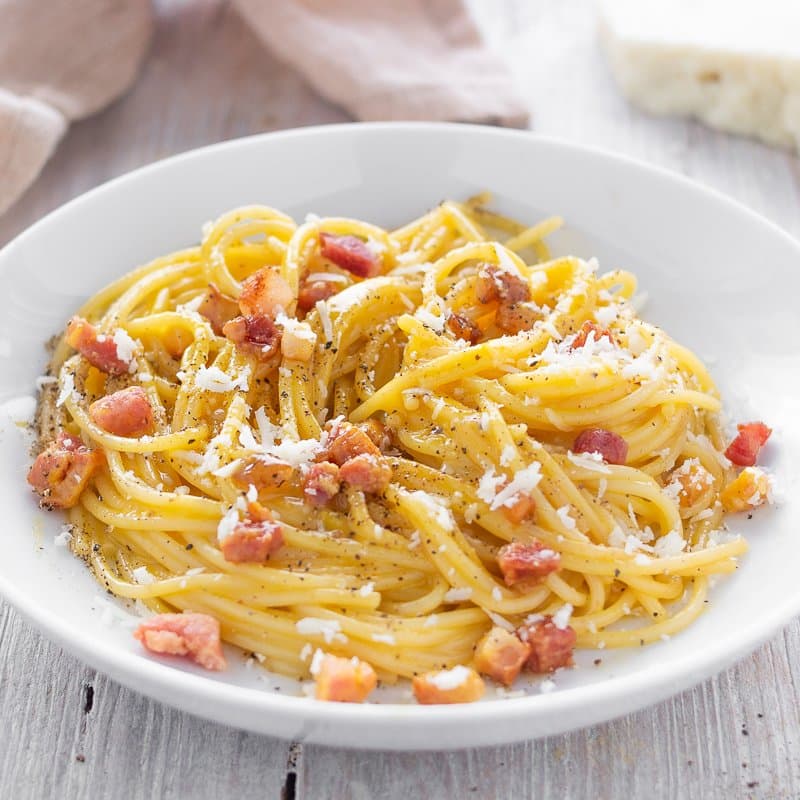
Carbonara
Carbonara
Roman pasta of guanciale, egg, pecorino and pepper — no cream, no peas, no debate in this house except the usual one.
Recipe by I Want Some Food · Reviewed by the editorial kitchen. Native name preserved: Carbonara.
1 person cooked this in the public kitchen. Kitchen-tested by I Want Some Food. Not a purchased rating.
- Prep
- 10 min
- Cook
- 20 min
- Total
- 30 min
- Difficulty
- Medium
- Spice
- No chilli
- Cost
- Weeknight budget$8–16 USD · indicative, not a store price
About
Carbonara is an emulsion, not a scrambled-egg accident. You render guanciale, cook pasta, then toss off the heat so egg and cheese become a glossy sauce with pasta water. Cream is not a Roman ingredient here. If you add it, you have made a different, valid, creamy pasta — just do not call it carbonara on our map.
Ingredients
Ingredients
- Pasta, spaghetti or rigatoni200 g
- Guanciale, cut into lardons100 g
- Pecorino Romano, finely grated, plus extra to serve40 g
- Black pepper, freshly cracked4.9 ml
- Salt, for the pasta water — go lighter than usual because pecorino is salty1 pinch
Sauce
- Egg, 1 whole egg plus 2 yolks (approx weights in yolks)3 large
Scaling multiplies the written quantities. Baking still prefers a scale.
Steps
Step 1
Put a large pot of water on to boil. Salt it, but not as fiercely as usual.
10 minStep 2
In a cold pan, add guanciale and cook over medium-low heat until the fat renders and the pieces are golden, 8–10 minutes. Keep the fat. Take the pan off the heat.
10 minWatch: Do not burn the meat. Bitter fat ruins the emulsion.
Step 3
Beat the whole egg, yolks, pecorino and lots of black pepper into a paste. It should look like a thick, pepper-flecked cream.
3 minStep 4
Boil pasta until just shy of al dente. Scoop out a mug of pasta water, then drain.
9 minStep 5
Add pasta to the pan with guanciale. Toss in the fat. Wait 30 seconds so the pan is hot but not scorching. Off the heat, add the egg mixture and a splash of pasta water, tossing hard until glossy. Add more water if it looks scrambled or tight.
3 minTip: If it scrambles, the pan was too hot. If it is soup, you need more cheese and tossing.
Step 6
Serve immediately with more pecorino and more pepper. Carbonara does not sit.
Adapt this recipe
The canonical recipe stays intact. Personal versions are labelled. Serving changes are maths, not AI.
Adaptations · 0 / 15 used. Resets 24 August.
Substitutions
Guanciale → Pancetta
Less funky, still correct-adjacent. Bacon adds smoke — use only if that is what you have, and know you changed the dish.
Pecorino → Mostly pecorino plus a little parmigiano
Common even in Rome. All parmigiano is milder and less sharp.
Tips
- Warm the bowls. Cold ceramic steals gloss.
- Guanciale fat is the sauce. Do not drain it like bacon for a diet blog.
History & culture
This is trattoria cooking from Lazio. Romans argue about pecorino versus a little parmigiano, about spaghetti versus rigatoni, about whether the egg is whole or yolk-heavy. We use mostly yolks plus one whole egg, pecorino, and guanciale because that is the version that tastes most like the dish people mean.
Carbonara as commonly cooked now is mid-20th-century Roman food, not ancient. That does not make it less Italian. It makes it modern Roman, which is allowed.
Traditional — Pancetta if you cannot find guanciale. No cream. Black pepper should be aggressive.
Provenance: Editorial adaptation. Original editorial adaptation for I Want Some Food.
Questions about this recipe
Answers taken from this dish's times, amounts, swaps and tips — not a chatbot.
How long does Carbonara take?
30 min all in — 10 min prep, 20 min cook. That is the time on this recipe, not a guess.
How many does it serve?
The recipe is written for 2 plates. Scale the ingredient list on the page if you are cooking for a different number.
How hard is it?
Medium.
How spicy is it?
No chilli.
What allergens should I watch?
This recipe is labelled for Wheat, Eggs, Milk. Labels are informational — check the packets in your kitchen. This is not medical advice.
Does it fit a diet?
The published recipe is labelled Nut-free.
What does it cost to cook?
Weeknight budget — about $8–16 USD, as a grocery budget for this recipe, not a restaurant price.
What equipment do I need?
Stockpot, Frying pan, Mixing bowl.
How much salt do I put in?
The recipe lists Salt at 1 pinch (for the pasta water — go lighter than usual because pecorino is salty).
What can I use instead?
Guanciale → Pancetta. Less funky, still correct-adjacent. Bacon adds smoke — use only if that is what you have, and know you changed the dish. Pecorino → Mostly pecorino plus a little parmigiano. Common even in Rome. All parmigiano is milder and less sharp.
What should I watch for?
Do not burn the meat. Bitter fat ruins the emulsion.
Any tips from this recipe?
Warm the bowls. Cold ceramic steals gloss. Guanciale fat is the sauce. Do not drain it like bacon for a diet blog.
Can I use an air fryer?
This method is not written for an air fryer. The core technique on the page still applies.