


Korean ramyeon
라면
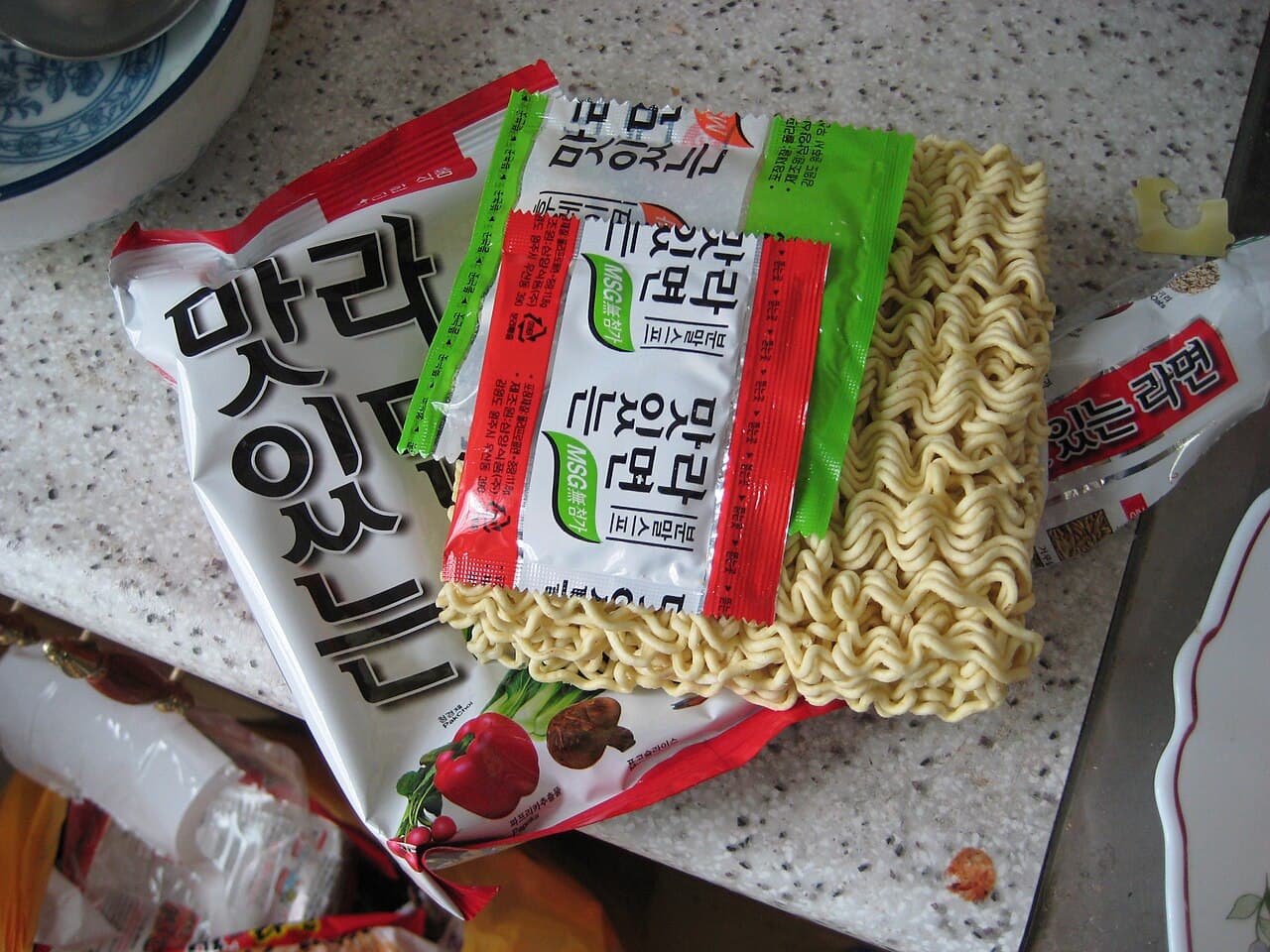
Instant noodles cooked like a home cook actually does it: extra garlic, an egg, and kimchi on the side.
Recipe by I Want Some Food · Reviewed by the editorial kitchen. Native name preserved: 라면.
0 people cooked this in the public kitchen yet. Kitchen-tested by I Want Some Food. Not a purchased rating.
- Prep
- 5 min
- Cook
- 8 min
- Total
- 13 min
- Difficulty
- Very easy
- Spice
- Hot
- Cost
- Cheap nightUnder $8 USD · indicative, not a store price
About
Ramyeon is the brick in the cupboard, not a shame dish. The packet is the start. This is how a lot of Korean kitchens finish it: more gochugaru, a slice of cheese if that is the house, an egg, spring onion, and leftover kimchi. We are not rewriting Shin Ramyun. We are writing the bowl around it.
Ingredients
- Wheat noodles, instant Korean ramyeon, plus its soup packet1 block
- Water450 ml
- Garlic, minced (optional)1 clove
- Gochugaru (optional)2½ ml
- Spring onion1
- Egg1 large
- Kimchi (optional)80 g
- Melting cheese (optional)20 g
- Garaetteok (optional)50 g
Scaling multiplies the written quantities. Baking still prefers a scale.
Steps
Step 1
Boil the water. Add the soup packet, garlic and gochugaru. Add tteok if using.
2 minStep 2
Add noodles. Cook 3 minutes, stirring so the brick opens. Crack the egg in for the last minute — swirl for egg-drop, or leave it whole.
4 minStep 3
Cheese on top if that is your house. Spring onion. Kimchi on the side. Eat before the noodles go sad.
Adapt this recipe
The canonical recipe stays intact. Personal versions are labelled. Serving changes are maths, not AI.
Adaptations · 0 / 15 used. Resets 24 August.
Substitutions
Korean ramyeon packet → Any instant noodle
The chilli profile changes. Still a night bowl.
Tips
- Use a little less water than the packet if you want a stickier, tteokbokki-adjacent sauce.
- American cheese is the convenience-store classic, not cheddar.
History & culture
Dormitories, offices, 2 a.m. This is the most cooked Korean noodle on earth. Calling it 'just instant' misses the point of how people eat.
Industrial ramyeon arrived in the 1960s and became national infrastructure. The packet is Korean even when the wheat is not.
Modern adaptation — Start with a Korean ramyeon packet. The extras are home habit, not a restaurant recipe.
Provenance: Editorial adaptation. Original editorial adaptation for I Want Some Food. Not copied from another recipe site. Official recipe photography is pending. Photograph: Timber Tank via Wikimedia Commons (CC BY-SA 2.0). https://commons.wikimedia.org/wiki/File:Korean%20food-Tasty%20ramyeon-02.jpg
Questions about this recipe
Answers taken from this dish's times, amounts, swaps and tips — not a chatbot.
How long does Korean ramyeon take?
13 min all in — 5 min prep, 8 min cook. That is the time on this recipe, not a guess.
How many does it serve?
The recipe is written for 1 bowls. Scale the ingredient list on the page if you are cooking for a different number.
How hard is it?
Very easy.
How spicy is it?
Hot.
What allergens should I watch?
This recipe is labelled for Wheat, Soy, Eggs. Labels are informational — check the packets in your kitchen. This is not medical advice.
Does it fit a diet?
The published recipe is labelled Vegetarian, Dairy-free, Nut-free.
What does it cost to cook?
Cheap night — about Under $8 USD, as a grocery budget for this recipe, not a restaurant price.
What equipment do I need?
Saucepan.
How much salt do I put in?
This recipe does not list salt as its own ingredient. Saltiness comes from Kimchi — 80 g (optional). Taste at the end rather than adding a number we did not write.
How much gochugaru?
½ tsp (optional) of Gochugaru.
How much kimchi?
80 g (optional) of Kimchi.
What can I use instead?
Korean ramyeon packet → Any instant noodle. The chilli profile changes. Still a night bowl.
Any tips from this recipe?
Use a little less water than the packet if you want a stickier, tteokbokki-adjacent sauce. American cheese is the convenience-store classic, not cheddar.
Can I use an air fryer?
This method is not written for an air fryer. The core technique on the page still applies.
Similar dishes
Budae jjigae
부대찌개
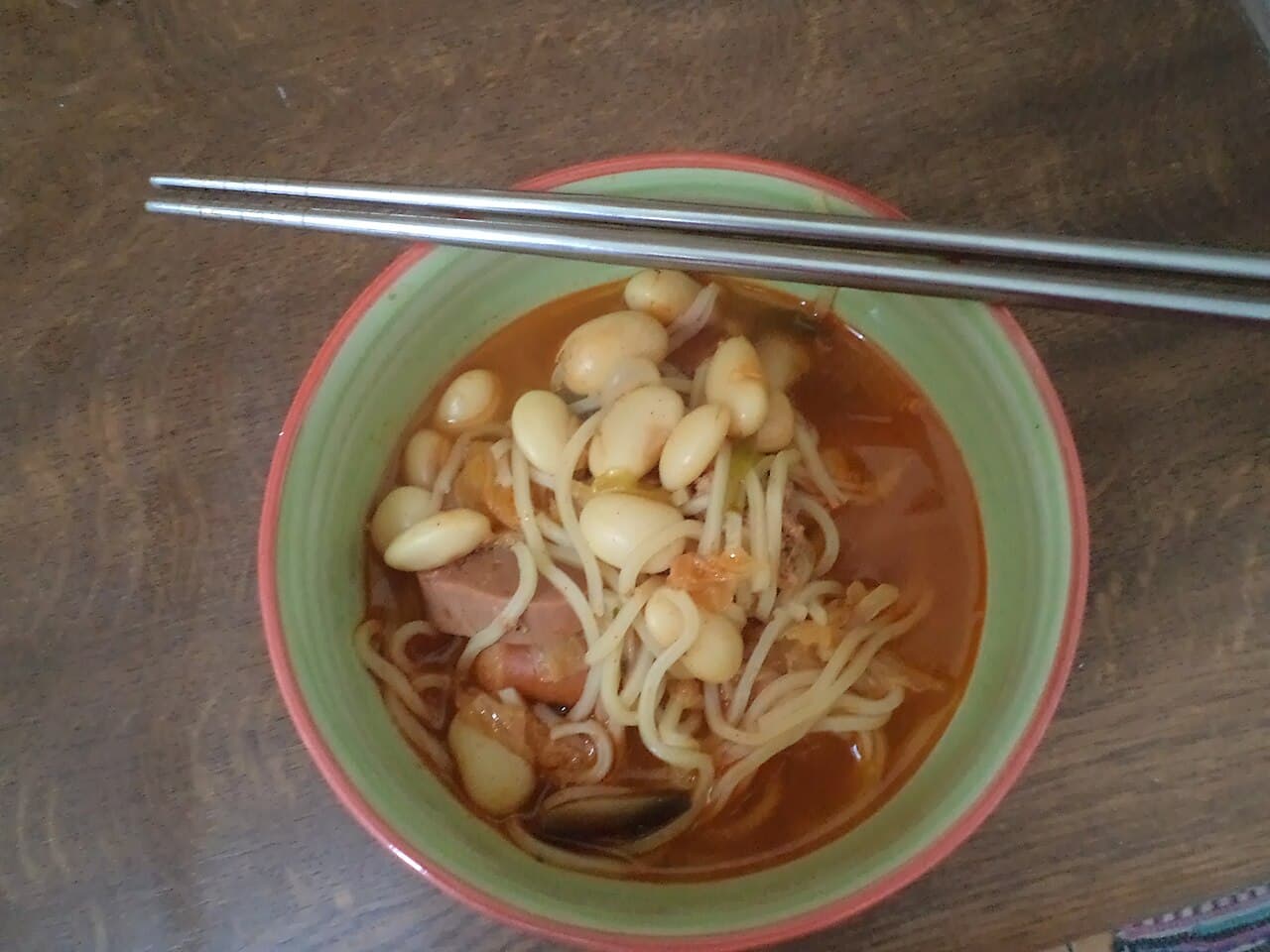
Army-base stew: kimchi, spam, sausages and ramyeon in a gochujang broth that refuses to be precious.
40 minEasy🌶️🌶️🌶️
Tteokbokki
떡볶이
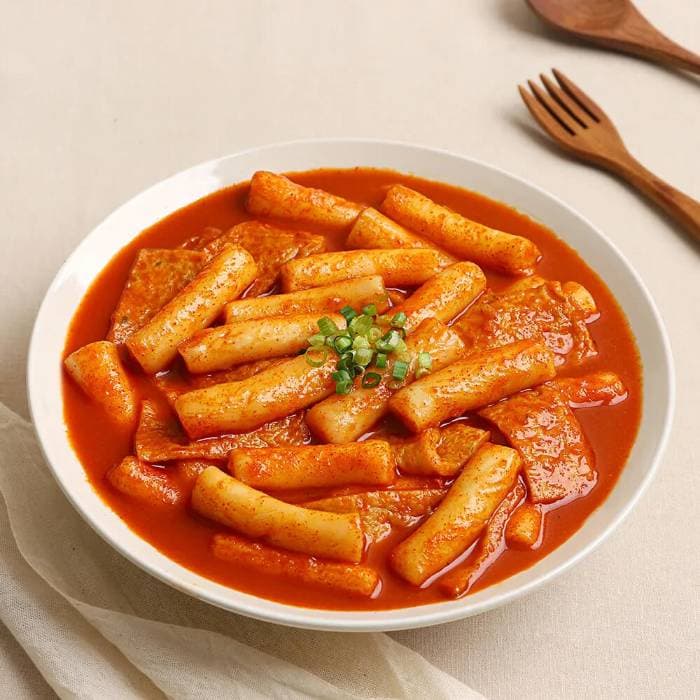
Chewy rice cakes in a glossy gochujang sauce — the street stall that made K-food a late-night sport.
30 minEasy🌶️🌶️🌶️
Gyeran-bap
계란밥
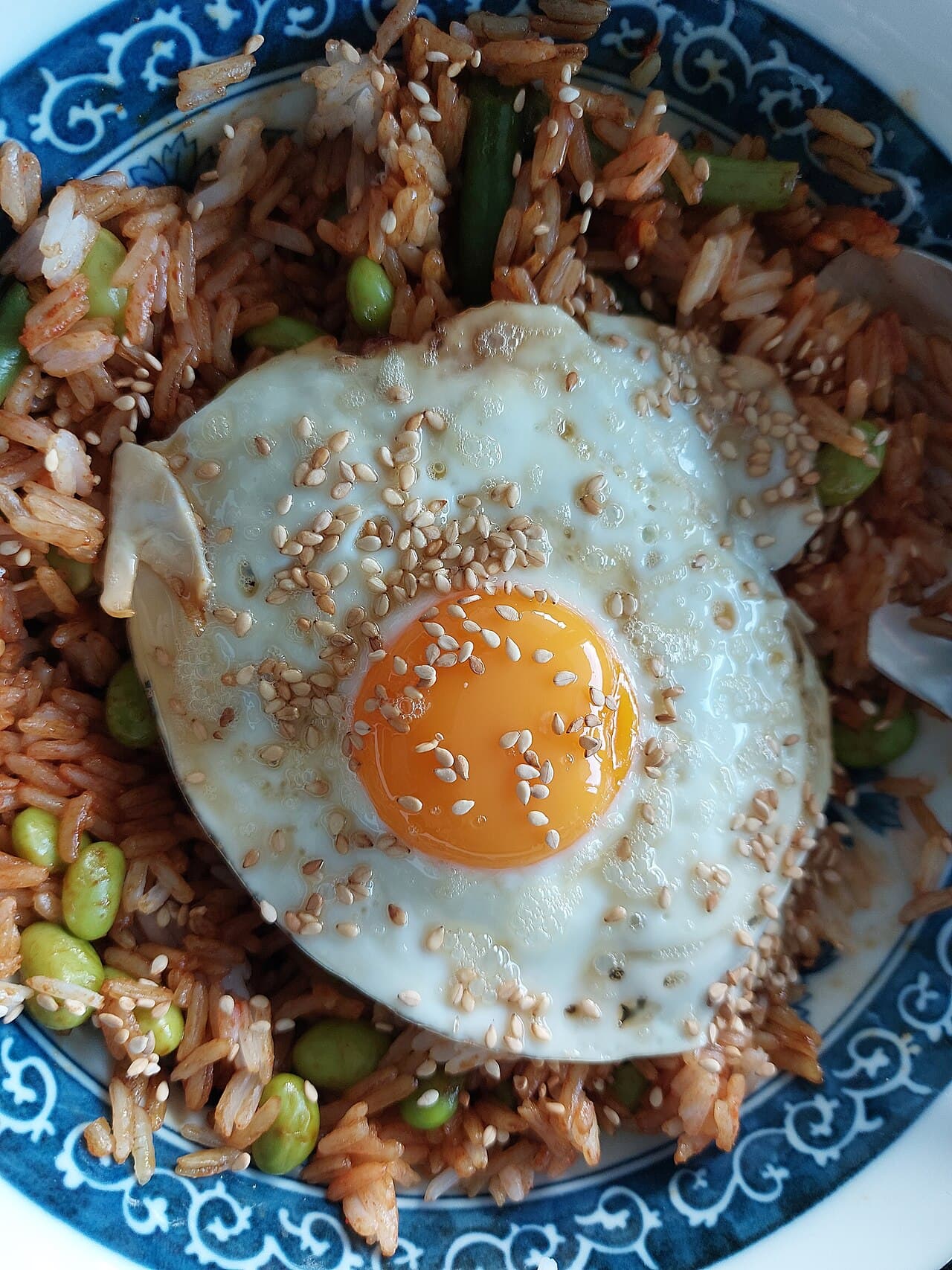
Hot rice, a fried or raw-ish egg, sesame oil and soy — the 4-ingredient bowl that still counts as cooking.
7 minEasyNo chilli