


Bindae-tteok
빈대떡
Crispy mung-bean pancakes with kimchi or sprouts — market food you eat with a raw onion dip.
Recipe by I Want Some Food · Reviewed by the editorial kitchen. Native name preserved: 빈대떡.
0 people cooked this in the public kitchen yet. Kitchen-tested by I Want Some Food. Not a purchased rating.
- Prep
- 20 min
- Cook
- 20 min
- Total
- 4 hr 40 min
- Difficulty
- Medium
- Spice
- No chilli
- Cost
- Cheap nightUnder $8 USD · indicative, not a store price
About
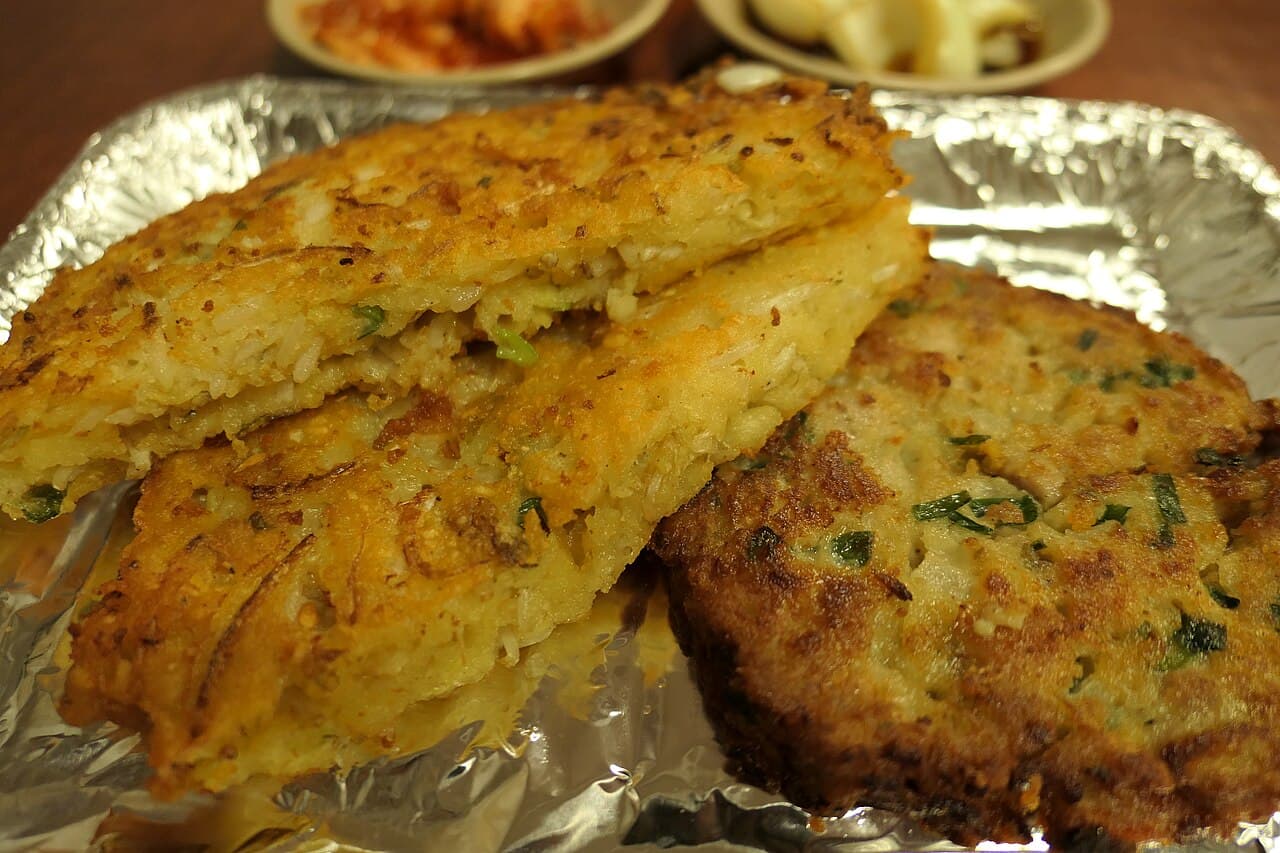
Bindae-tteok is a ground mung-bean pancake, heavier and nuttier than pajeon. The batter is beans, not much flour. Kimchi or mung-bean sprouts in the mix are common. You want a thick, lacy crust and a steamed, beany middle. Dip in soy-vinegar with a slice of raw onion.
Ingredients
Ingredients
- Mung beans250 g
- Water100 ml
- Kimchi, chopped (optional)100 g
- Bean sprouts (optional)80 g
- Spring onion2
- Salt2½ ml
- Neutral oil59 ml
- Onion, raw slices, for the dip¼
Scaling multiplies the written quantities. Baking still prefers a scale.
Steps
Step 1
Soak skinned mung beans 4–8 hours. Drain. Blend with just enough water to make a thick, slightly grainy batter. Salt.
10 minStep 2
Fold in kimchi, sprouts and spring onion. Fry ladlefuls in a well-oiled pan until both sides are deep brown and crisp, 3–4 minutes a side.
16 minStep 3
Serve with soy-vinegar and raw onion.
Adapt this recipe
The canonical recipe stays intact. Personal versions are labelled. Serving changes are maths, not AI.
Adaptations · 0 / 15 used. Resets 24 August.
Substitutions
Skinned mung beans → Split yellow moong dal
The grocery stand-in.
Tips
- Pork mince in the batter is a richer market version.
- The batter thickens as it sits — loosen with a spoon of water.
History & culture
Gwangjang market made it famous. It is also home food when you soaked beans yesterday.
Nokdu-jeon is an old poor-day and party-day pancake. The market plate is the one tourists photograph.
Traditional
Provenance: Editorial adaptation. Original editorial adaptation for I Want Some Food. Not copied from another recipe site. Official recipe photography is pending. Photograph: bryan... from Taipei, Taiwan via Wikimedia Commons (CC BY-SA 2.0). https://commons.wikimedia.org/wiki/File:Bindae-tteok%20(32013676035).jpg
Questions about this recipe
Answers taken from this dish's times, amounts, swaps and tips — not a chatbot.
How long does Bindae-tteok take?
4 hr 40 min all in — 20 min prep, 20 min cook, 4 hr rest. That is the time on this recipe, not a guess.
How many does it serve?
The recipe is written for 4 pancakes. Scale the ingredient list on the page if you are cooking for a different number.
How hard is it?
Medium.
How spicy is it?
No chilli.
What allergens should I watch?
This recipe is labelled for Soy. Labels are informational — check the packets in your kitchen. This is not medical advice.
Does it fit a diet?
The published recipe is labelled Vegetarian, Vegan, Gluten-free, Dairy-free, Nut-free.
What does it cost to cook?
Cheap night — about Under $8 USD, as a grocery budget for this recipe, not a restaurant price.
What equipment do I need?
Blender, Frying pan.
How much salt do I put in?
The recipe lists Salt at ½ tsp.
How much kimchi?
100 g (chopped, optional) of Kimchi.
How much soy sauce?
2 tbsp of Soy sauce.
How much vinegar?
1 tbsp of Vinegar.
What can I use instead?
Skinned mung beans → Split yellow moong dal. The grocery stand-in.
Any tips from this recipe?
Pork mince in the batter is a richer market version. The batter thickens as it sits — loosen with a spoon of water.
Can I use an air fryer?
This method is not written for an air fryer. The core technique on the page still applies.
Similar dishes
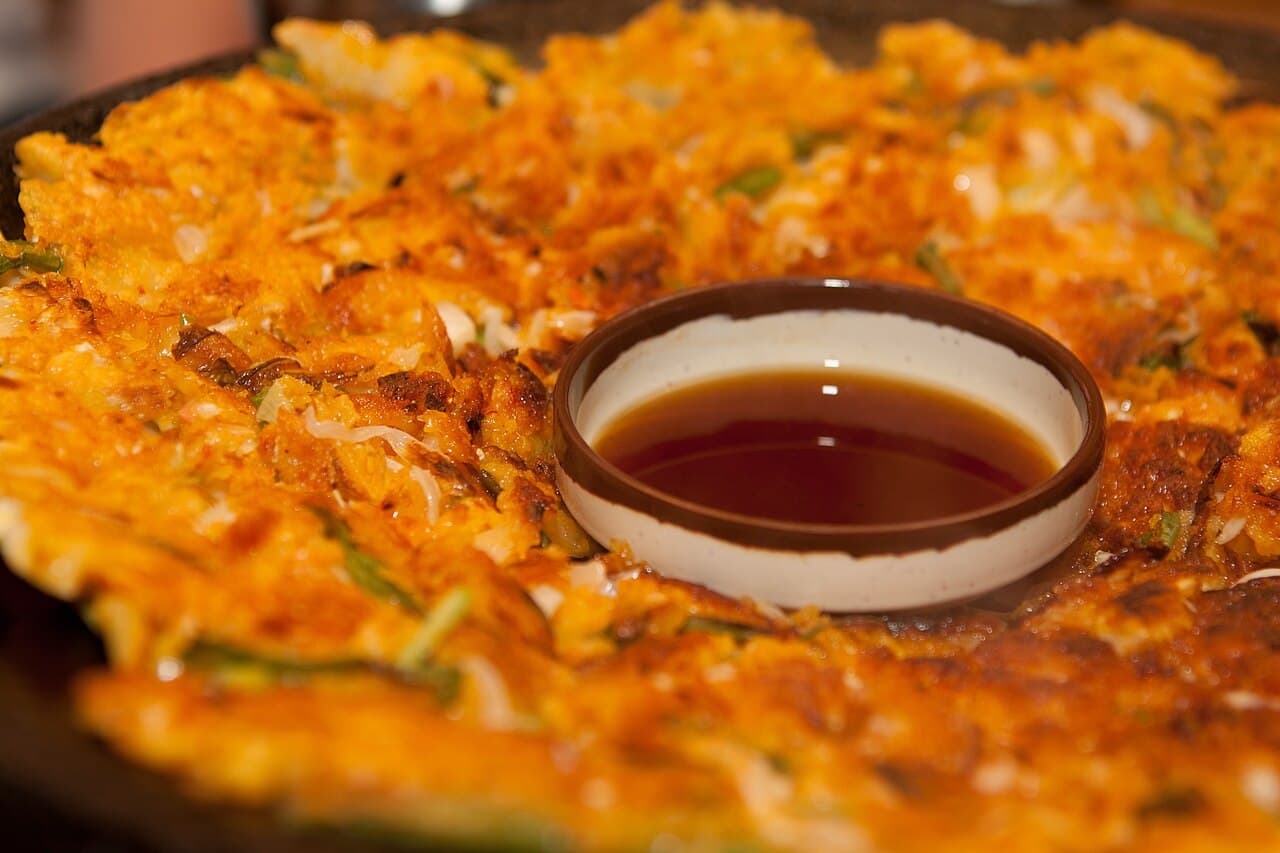
Haemul pajeon
해물파전
A crispy-edged spring-onion and seafood pancake — the rainy-day order, and the one you tear with your hands.
35 minMediumNo chilli
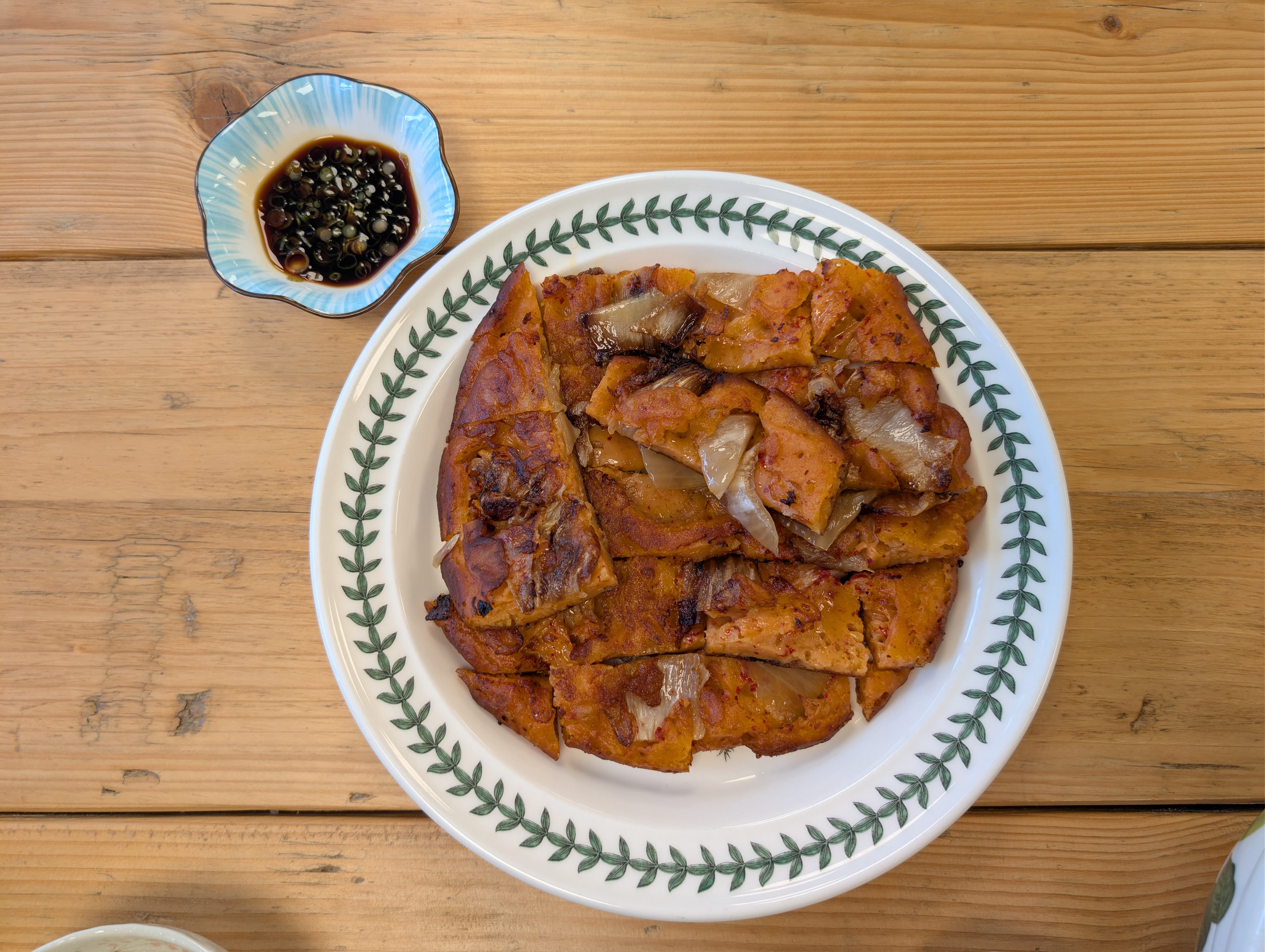
Kimchi-jeon
김치전
A sour, lacy kimchi pancake — the fridge-door dinner when the kimchi is too ripe to be polite.
22 minEasy🌶️🌶️
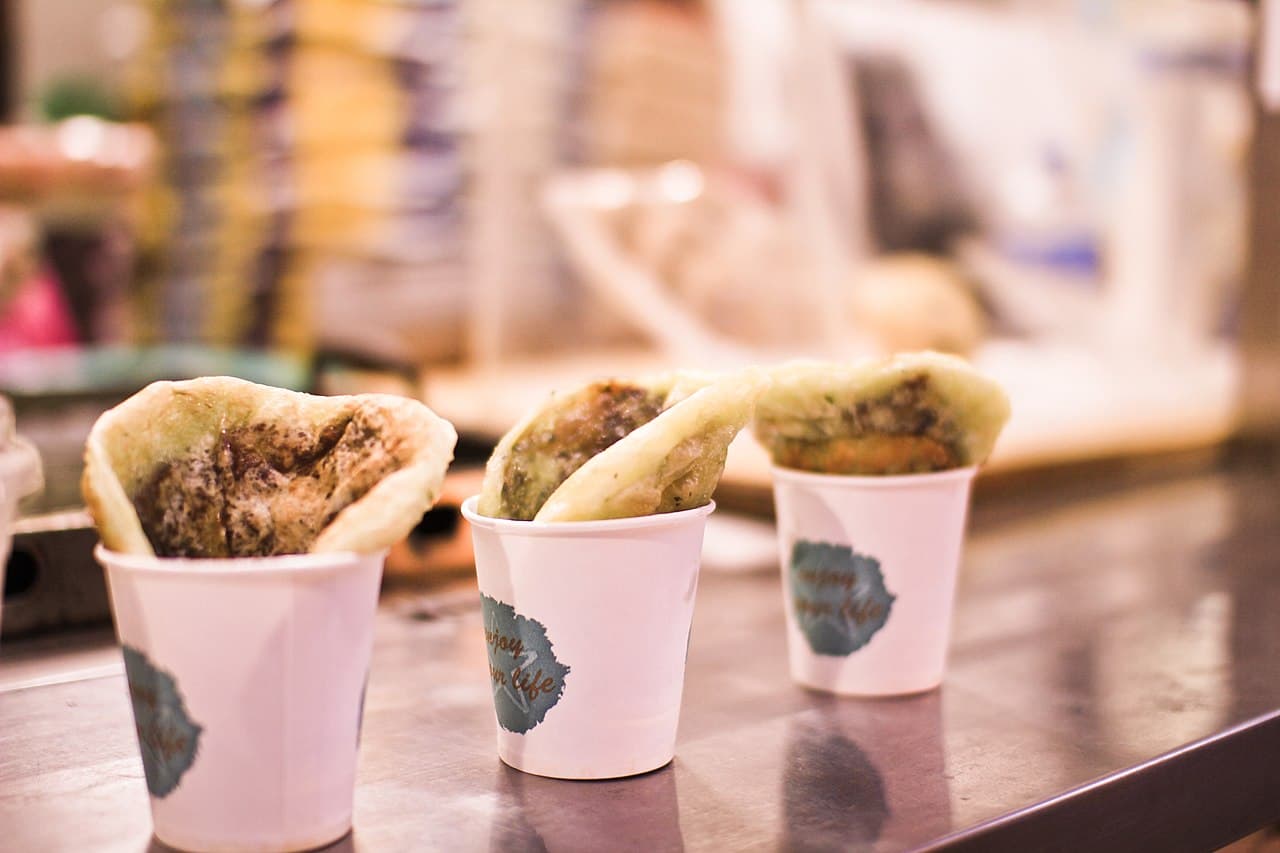
Hotteok
호떡
Yeast pancakes stuffed with brown sugar and nuts, smashed in the pan until the filling caramelises.
1 hr 40 minMediumNo chilli