


Gungjung-tteokbokki
궁중떡볶이
The older soy-sesame rice-cake stir-fry — court-style tteokbokki before the street went red.
Recipe by I Want Some Food · Reviewed by the editorial kitchen. Native name preserved: 궁중떡볶이.
0 people cooked this in the public kitchen yet. Kitchen-tested by I Want Some Food. Not a purchased rating.
- Prep
- 15 min
- Cook
- 15 min
- Total
- 30 min
- Difficulty
- Easy
- Spice
- No chilli
- Cost
- Weeknight budget$8–16 USD · indicative, not a store price
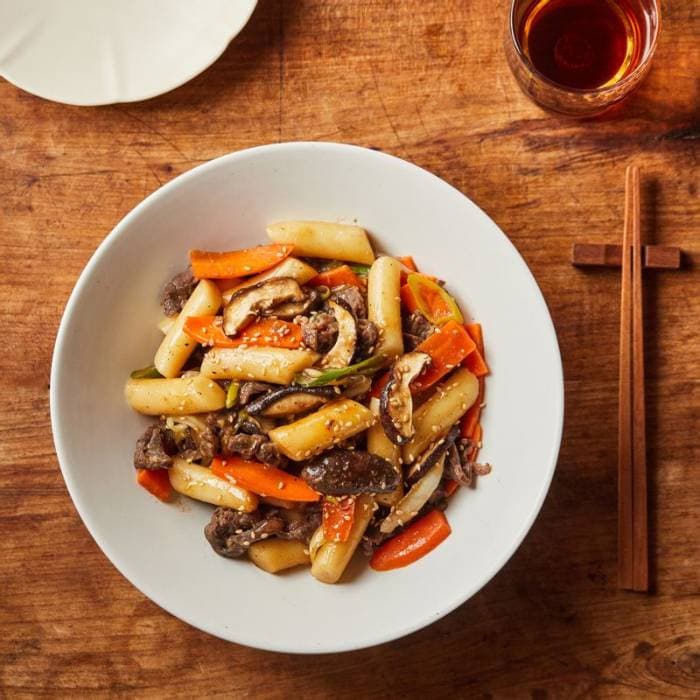
About
Before Sindang-dong made tteokbokki red, rice cakes were stir-fried with soy, sesame and vegetables, sometimes a little beef. That bowl is gungjung (royal court) tteokbokki. It is milder, browner, and a useful reminder that the chilli stall is not the whole history.
Ingredients
- Garaetteok, soaked until flexible400 g
- Soy sauce44 ml
- Sugar15 ml
- Toasted sesame oil15 ml
- Garlic2 clove
- Beef, thin strips (optional)100 g
- Carrot, julienned½
- Onion½
- Spinach (optional)80 g
- Mushrooms (optional)60 g
- Spring onion2
- Sesame seeds4.9 ml
- Neutral oil15 ml
Scaling multiplies the written quantities. Baking still prefers a scale.
Steps
Step 1
Soak rice cakes. Mix soy, sugar, sesame oil and garlic.
10 minStep 2
Sear beef if using. Stir-fry onion, carrot and mushroom. Add cakes and the soy mix with a splash of water. Toss until the cakes are chewy and glazed, 6–8 minutes.
10 minStep 3
Fold in spinach and spring onion. Sesame seeds.
Adapt this recipe
The canonical recipe stays intact. Personal versions are labelled. Serving changes are maths, not AI.
Adaptations · 0 / 15 used. Resets 24 August.
Substitutions
Beef → More mushrooms
The vegetarian court table.
Tips
- This is closer to japchae logic than to street tteokbokki.
- A drizzle of honey at the end shines the glaze.
History & culture
Still served at traditional restaurants and home tables that want tteok without a fire alarm. Good next to the red one, not instead of admitting both exist.
Joseon court cooking used soy-braised rice cakes. The gochujang street snack is modern. We keep both in the catalog on purpose.
Traditional
Provenance: Editorial adaptation. Original editorial adaptation for I Want Some Food. Not copied from another recipe site. Official recipe photography is pending. Photograph: Photograph supplied by the editorial kitchen. (Editorial supply).
Questions about this recipe
Answers taken from this dish's times, amounts, swaps and tips — not a chatbot.
How long does Gungjung-tteokbokki take?
30 min all in — 15 min prep, 15 min cook. That is the time on this recipe, not a guess.
How many does it serve?
The recipe is written for 2 plates. Scale the ingredient list on the page if you are cooking for a different number.
How hard is it?
Easy.
How spicy is it?
No chilli.
What allergens should I watch?
This recipe is labelled for Soy, Sesame. Labels are informational — check the packets in your kitchen. This is not medical advice.
Does it fit a diet?
The published recipe is labelled Gluten-free, Dairy-free, Nut-free.
What does it cost to cook?
Weeknight budget — about $8–16 USD, as a grocery budget for this recipe, not a restaurant price.
What equipment do I need?
Frying pan.
How much salt do I put in?
This recipe does not list salt as its own ingredient. Saltiness comes from Soy sauce — 3 tbsp. Taste at the end rather than adding a number we did not write.
How much soy sauce?
3 tbsp of Soy sauce.
How much sugar?
1 tbsp of Sugar.
How much toasted sesame oil?
1 tbsp of Toasted sesame oil.
What can I use instead?
Beef → More mushrooms. The vegetarian court table.
Any tips from this recipe?
This is closer to japchae logic than to street tteokbokki. A drizzle of honey at the end shines the glaze.
Can I use an air fryer?
This method is not written for an air fryer. The core technique on the page still applies.
Similar dishes
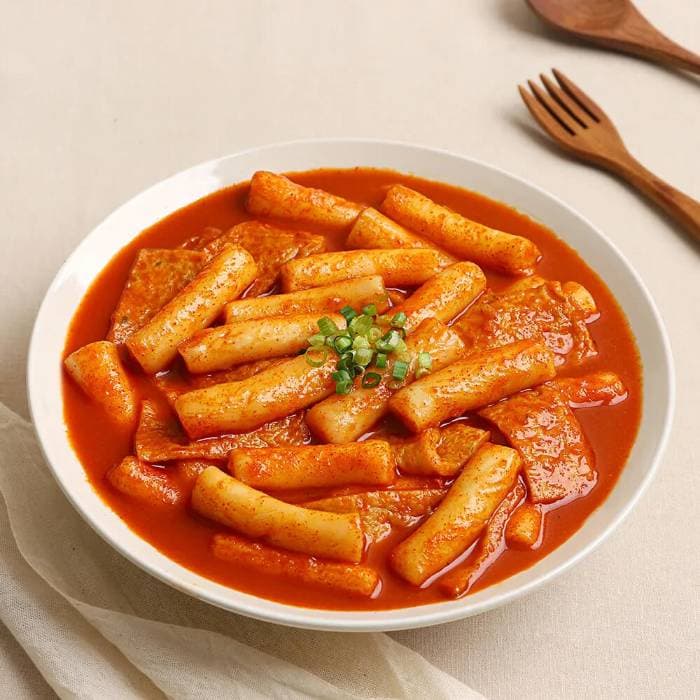
Tteokbokki
떡볶이
Chewy rice cakes in a glossy gochujang sauce — the street stall that made K-food a late-night sport.
30 minEasy🌶️🌶️🌶️
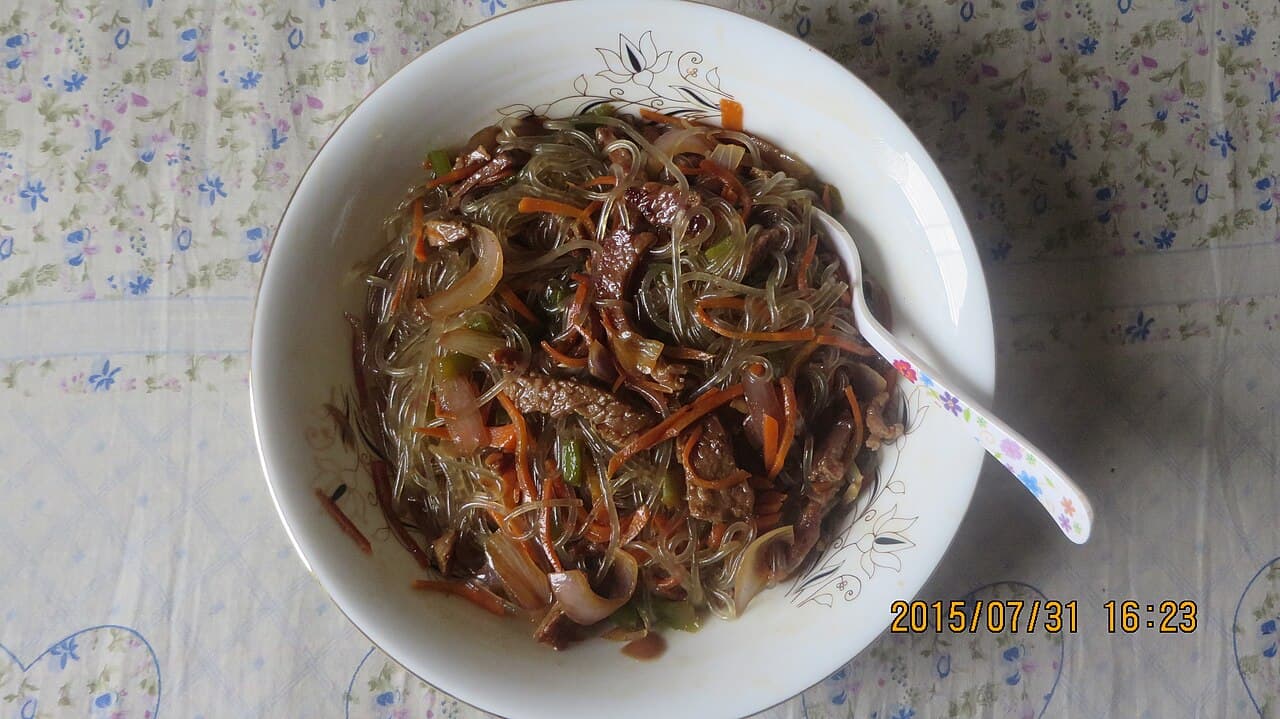
Japchae
잡채
Glossy sweet-potato noodles with sesame, soy and a rainbow of vegetables — banquet food that also does potluck.
55 minMediumNo chilli
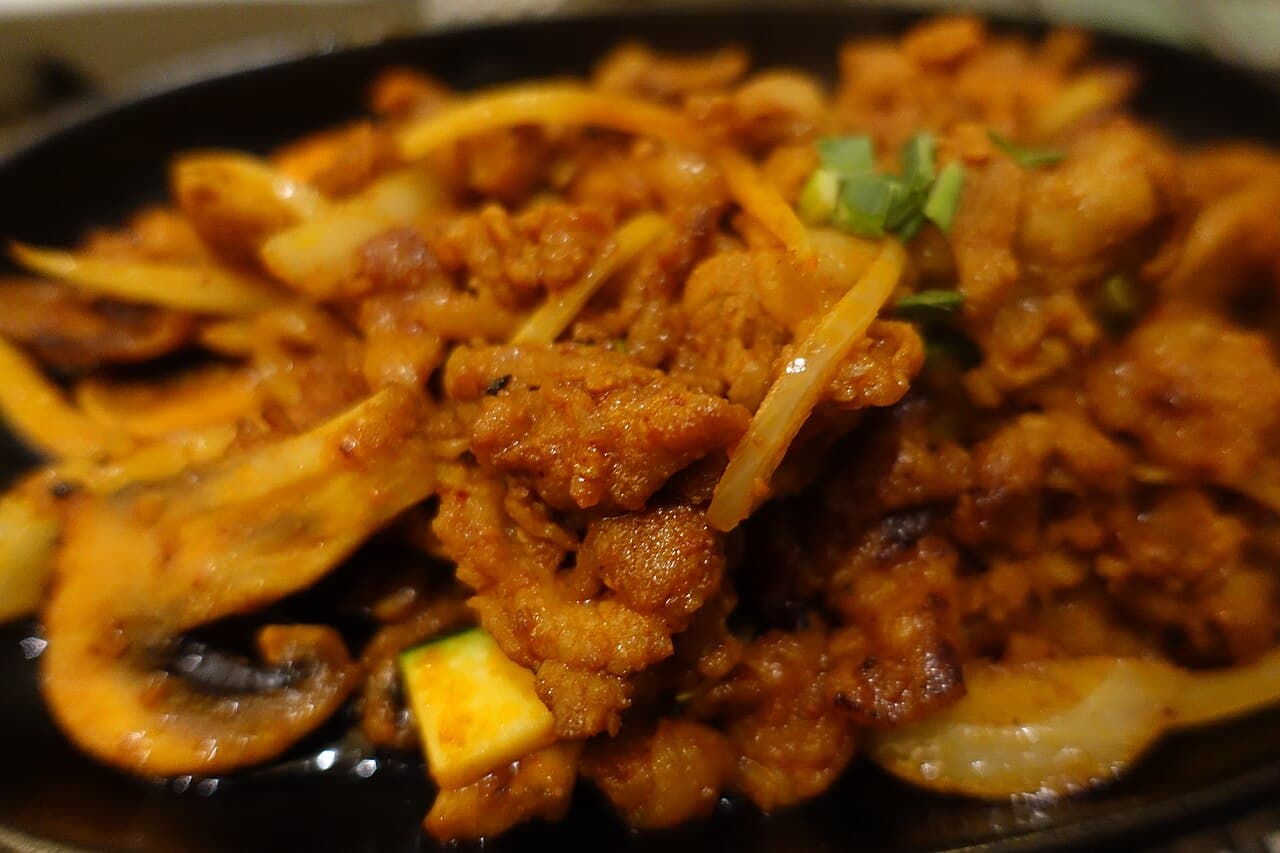
Bulgogi
불고기
Thin beef in a soy-pear-sesame marinade, cooked hot until the edges caramelise.
1 hrEasyNo chilli