


Kimchi jjigae
김치찌개
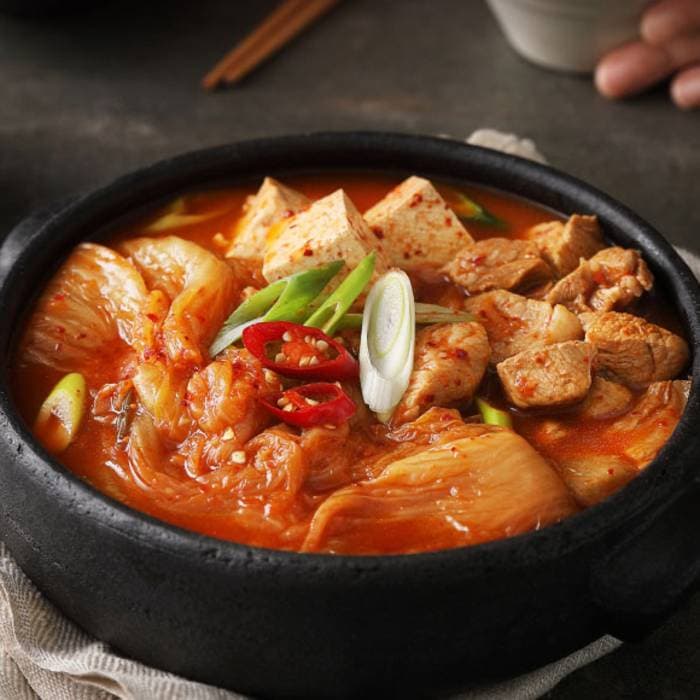
A bubbling kimchi stew with tofu and pork — the Korean answer to 'what is in the fridge and why is it sour'.
Recipe by I Want Some Food · Reviewed by the editorial kitchen. Native name preserved: 김치찌개.
0 people cooked this in the public kitchen yet. Kitchen-tested by I Want Some Food. Not a purchased rating.
- Prep
- 15 min
- Cook
- 35 min
- Total
- 50 min
- Difficulty
- Easy
- Spice
- Hot
- Cost
- Weeknight budget$8–16 USD · indicative, not a store price
About
Kimchi jjigae is what happens when kimchi gets too sour to eat politely and therefore becomes delicious. The stew is porky, chilli-red, and meant to be eaten with a bowl of rice you did not mix this time. Older kimchi is better than fresh. If your kimchi is still young and crunchy, cook it a little longer and add a pinch of extra gochujang.
Ingredients
Scaling multiplies the written quantities. Baking still prefers a scale.
Steps
Step 1
In a saucepan, cook the pork over medium heat until it loses raw colour and some fat renders, 4–5 minutes. Add onion and garlic and stir until fragrant.
6 minStep 2
Add chopped kimchi and its juice. Fry, stirring, until the kimchi looks a little translucent at the edges and smells cooked, about 5 minutes.
5 minTip: This step is the difference between 'kimchi in hot water' and stew.
Step 3
Stir in gochujang and soy sauce, then the water. Bring to a boil, then simmer 15–20 minutes until the broth tastes sour, salty and round.
20 minStep 4
Lay tofu on top and simmer 5 minutes more. Add spring onion. Finish with a few drops of sesame oil if you like.
6 minStep 5
Serve bubbling, with rice. Taste the broth — it should be aggressive. Add water if it went too far, more kimchi juice if it didn't go far enough.
Adapt this recipe
The canonical recipe stays intact. Personal versions are labelled. Serving changes are maths, not AI.
Adaptations · 0 / 15 used. Resets 24 August.
Substitutions
Pork → Tinned tuna in oil
Add the tuna later so it does not dry out. A classic pantry version.
Pork → King oyster mushrooms
Brown them well. Check your kimchi for fish sauce if you need the pot vegetarian.
Tips
- Day-old rice is fine. Fresh rice is better. No rice is a mistake.
- If the kimchi is mild, add a pinch of gochugaru or extra gochujang.
History & culture
This is home food, not banquet food. It shows up on weeknights, in kimbap shops as a side thought, and in hangovers. Every household has a ratio. We are offering one that works, not the one your friend's grandmother would defend in court.
Stewing kimchi is a practical use of a living ferment. Pork shoulder or belly is common in the south; tuna kimchi jjigae is a pantry variant. Tofu is not a vegetarian consolation prize — it is a texture the broth wants.
Traditional — Some versions skip pork for tuna or mushrooms. Anchovy-kelp stock is traditional; water plus kimchi juice still makes a respectable pot.
Provenance: Editorial adaptation. Original editorial adaptation for I Want Some Food. Photograph: Photograph supplied by the editorial kitchen. (Editorial supply).
Questions about this recipe
Answers taken from this dish's times, amounts, swaps and tips — not a chatbot.
How long does Kimchi jjigae take?
50 min all in — 15 min prep, 35 min cook. That is the time on this recipe, not a guess.
How many does it serve?
The recipe is written for 3 bowls. Scale the ingredient list on the page if you are cooking for a different number.
How hard is it?
Easy.
How spicy is it?
Hot.
What allergens should I watch?
This recipe is labelled for Soy, Wheat, Fish, Shellfish. Labels are informational — check the packets in your kitchen. This is not medical advice.
Does it fit a diet?
The published recipe is labelled Dairy-free, Nut-free.
What does it cost to cook?
Weeknight budget — about $8–16 USD, as a grocery budget for this recipe, not a restaurant price.
What equipment do I need?
Saucepan, Chef's knife.
How much salt do I put in?
This recipe does not list salt as its own ingredient. Saltiness comes from Kimchi — 400 g (chopped, plus 3 tbsp juice); Gochujang — 1 tbsp; Soy sauce — 1 tbsp. Taste at the end rather than adding a number we did not write.
How much kimchi?
400 g (chopped, plus 3 tbsp juice) of Kimchi.
How much gochujang?
1 tbsp of Gochujang.
How much soy sauce?
1 tbsp of Soy sauce.
How much toasted sesame oil?
1 tsp (optional) of Toasted sesame oil.
What can I use instead?
Pork → Tinned tuna in oil. Add the tuna later so it does not dry out. A classic pantry version. Pork → King oyster mushrooms. Brown them well. Check your kimchi for fish sauce if you need the pot vegetarian.
Any tips from this recipe?
Day-old rice is fine. Fresh rice is better. No rice is a mistake. If the kimchi is mild, add a pinch of gochugaru or extra gochujang.
Can I use an air fryer?
This method is not written for an air fryer. The core technique on the page still applies.
Similar dishes
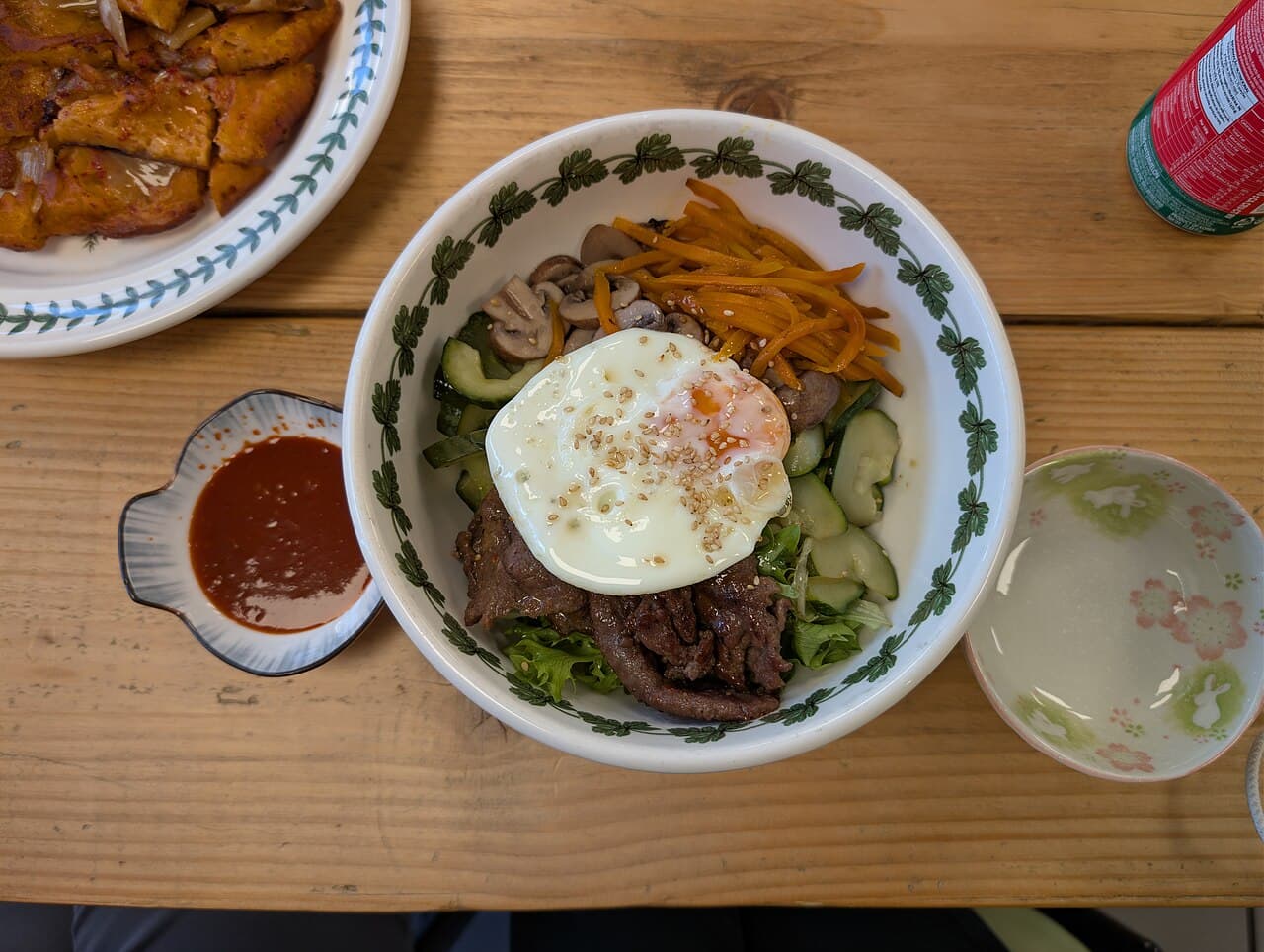
Bibimbap
비빔밥
A Korean rice bowl of seasoned vegetables, chilli paste and a runny yolk — mixed at the table until everything is the same red-gold colour.
1 hrMedium🌶️🌶️
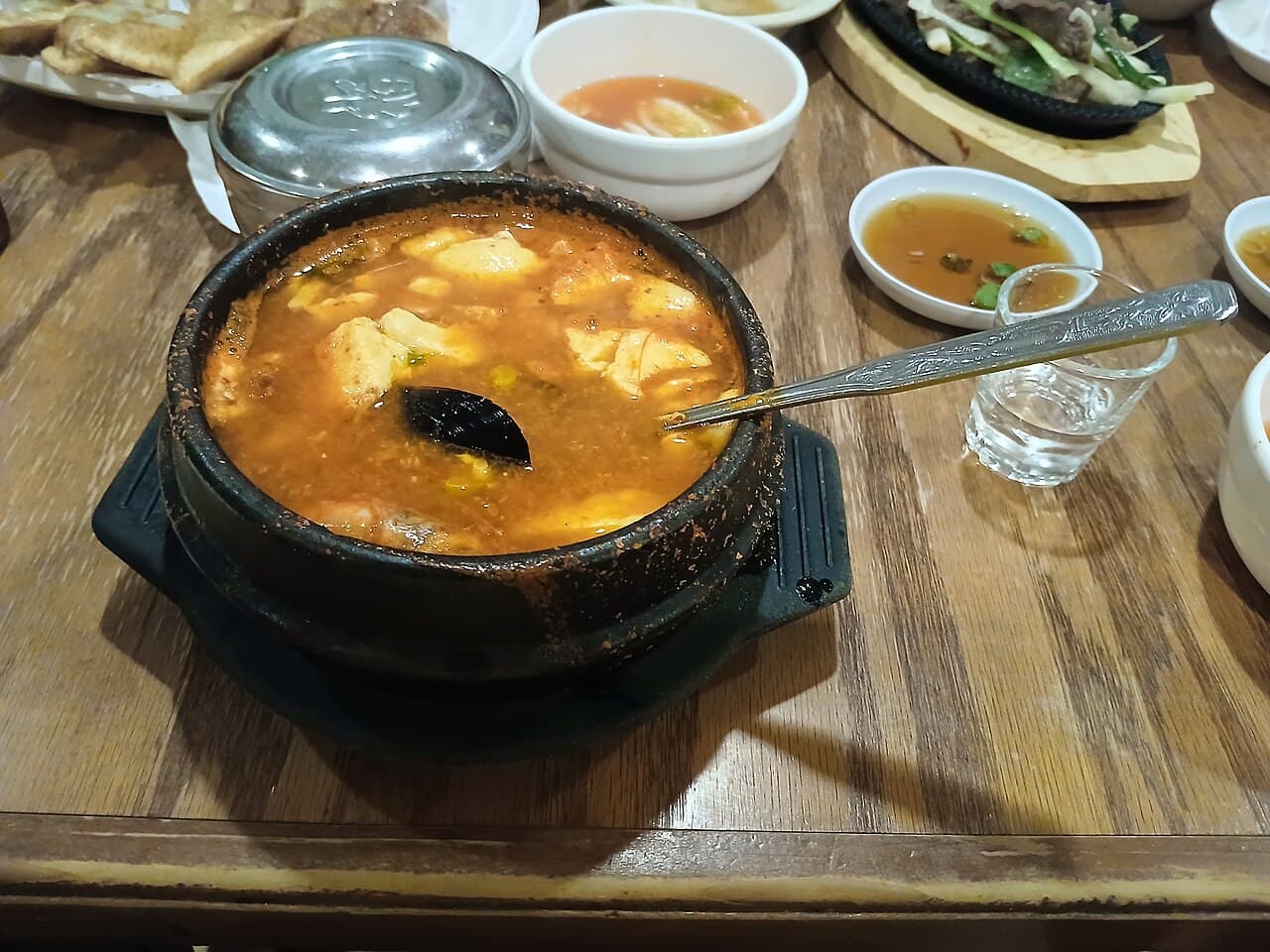
Sundubu jjigae
순두부찌개
A raging bowl of soft tofu, chilli broth and a cracked egg — the stew you eat before the spoon melts.
35 minEasy🌶️🌶️🌶️
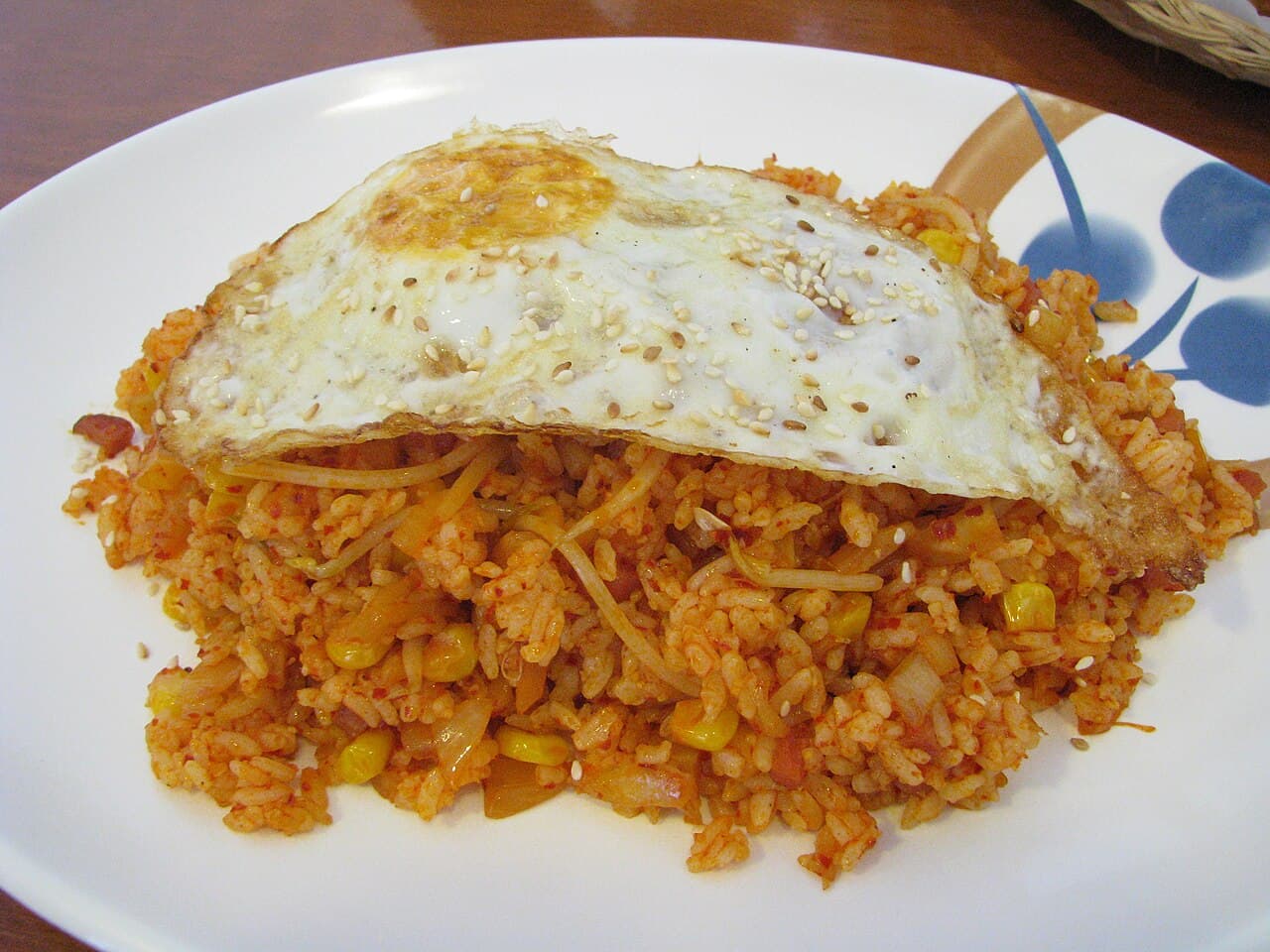
Kimchi-bokkeumbap
김치볶음밥
Kimchi fried rice with a fried egg — the 10-minute argument for keeping sour kimchi and leftover rice.
18 minEasy🌶️🌶️
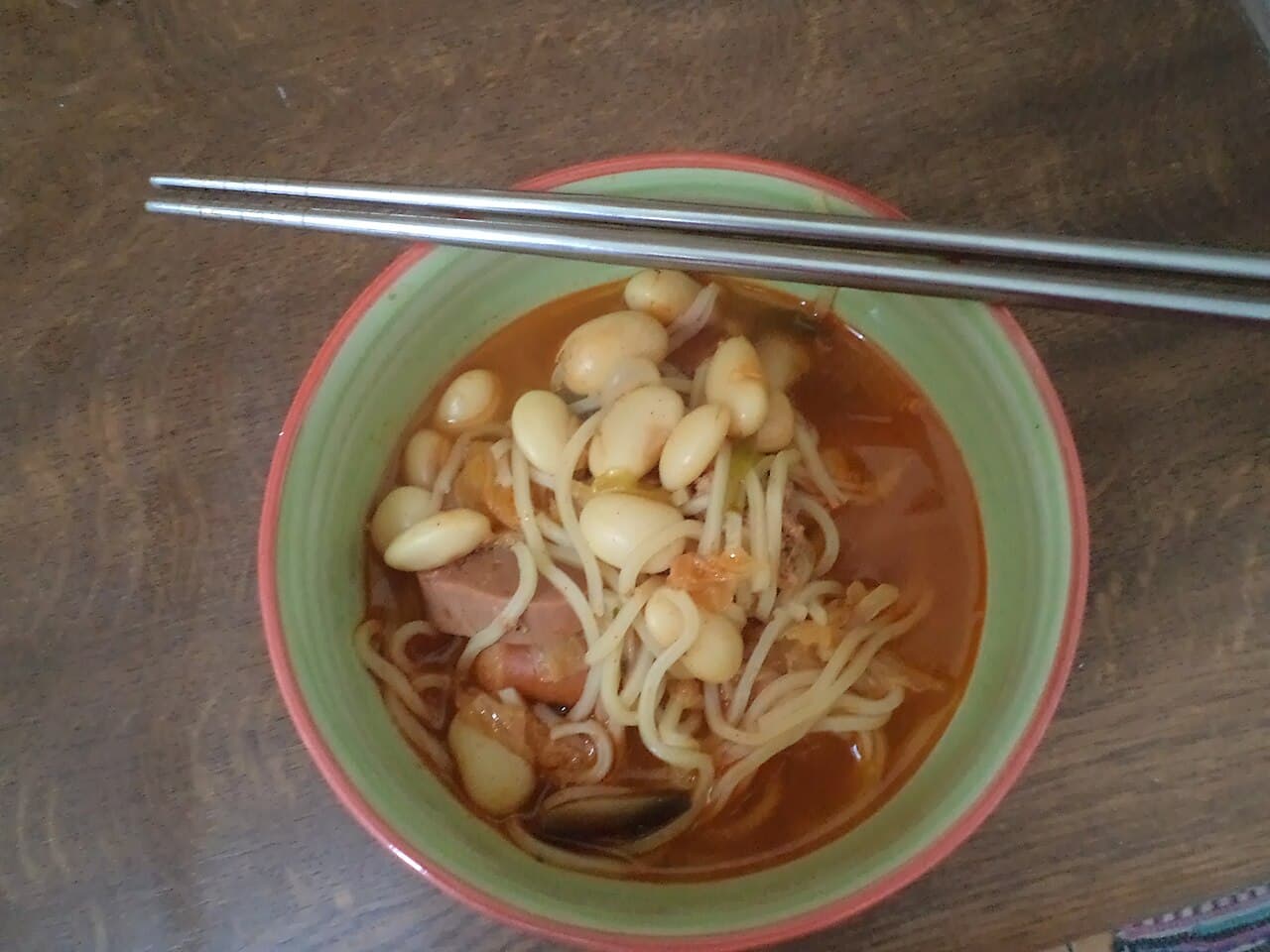
Budae jjigae
부대찌개
Army-base stew: kimchi, spam, sausages and ramyeon in a gochujang broth that refuses to be precious.
40 minEasy🌶️🌶️🌶️