


Yukgaejang
육개장
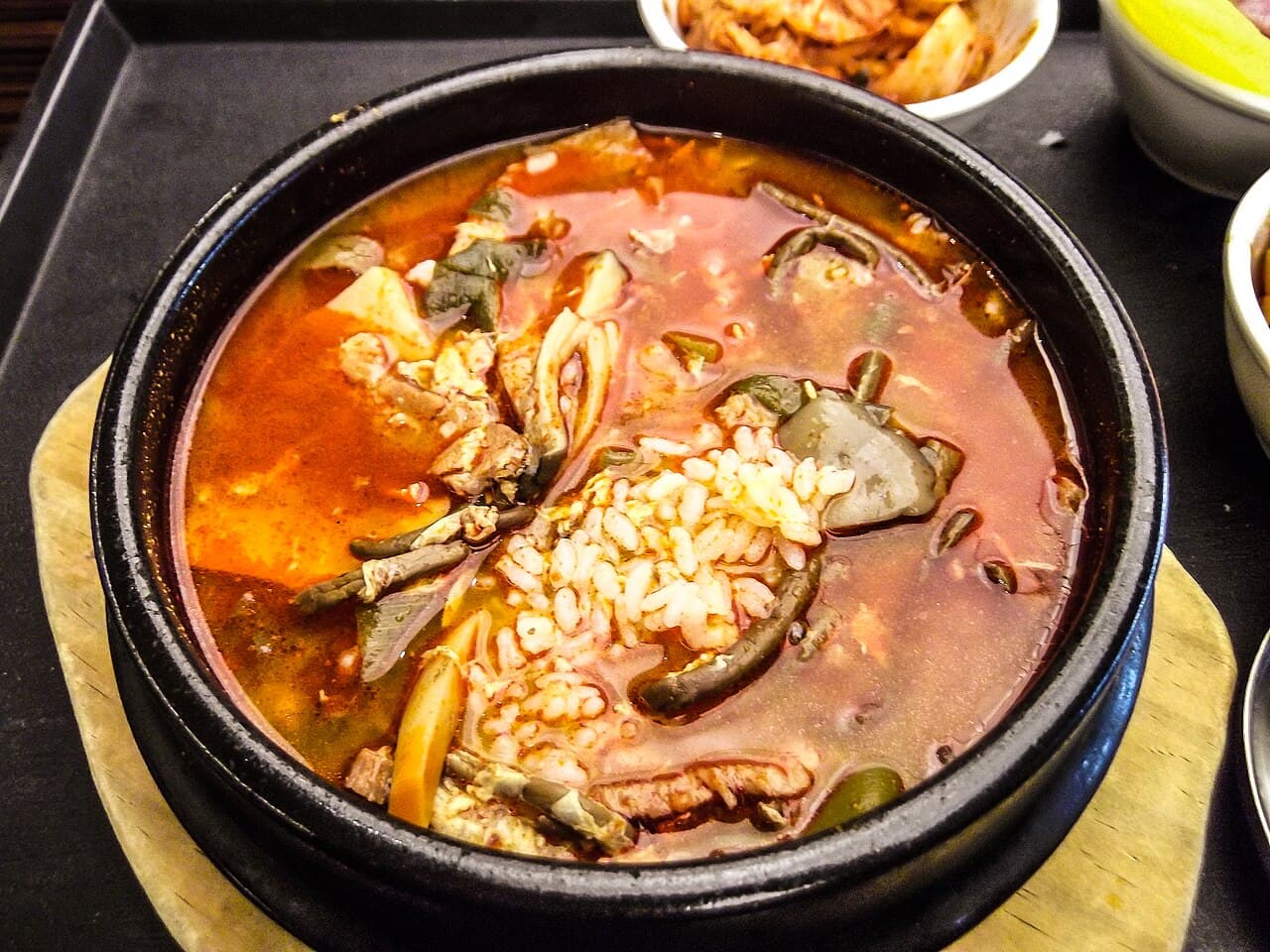
Shredded beef soup, red with gochugaru, full of fernbrake and spring onion — hangover logic that also works at lunch.
Recipe by I Want Some Food · Reviewed by the editorial kitchen. Native name preserved: 육개장.
0 people cooked this in the public kitchen yet. Kitchen-tested by I Want Some Food. Not a purchased rating.
- Prep
- 25 min
- Cook
- 1 hr 30 min
- Total
- 1 hr 55 min
- Difficulty
- Medium
- Spice
- Hot
- Cost
- A bit special$16–28 USD · indicative, not a store price
About
Yukgaejang is a spicy, beefy soup with a lot of texture: shredded brisket, soaked gosari if you have it, bean sprouts, and a lake of spring onion. The colour is chilli oil, not tomato. It should make you sweat a little and then feel better.
Ingredients
- Beef, brisket or flank600 g
- Gochugaru44 ml
- Toasted sesame oil30 ml
- Garlic5 clove
- Soy sauce30 ml
- Bean sprouts200 g
- Spring onion, cut into lengths6
- Onion1
- Water2 l
- Salt4.9 ml
- Black pepper2½ ml
- Rice, uncooked, to serve300 g
Scaling multiplies the written quantities. Baking still prefers a scale.
Steps
Step 1
Cover beef with water, boil, skim, then simmer until shreddable, 60–75 minutes. Lift out, shred, keep the broth.
70 minStep 2
In a bowl, rub shredded beef with gochugaru, sesame oil, garlic and soy until every strand is red.
5 minStep 3
Return beef to the broth with onion. Simmer 10 minutes. Add sprouts and spring onion for the last 5. Salt and pepper. Serve with rice.
Adapt this recipe
The canonical recipe stays intact. Personal versions are labelled. Serving changes are maths, not AI.
Adaptations · 0 / 15 used. Resets 24 August.
Substitutions
Brisket → Chuck
Shreds fine. Simmer until it does.
Tips
- Soaked gosari (fernbrake) is the traditional extra texture if you can find it.
- A raw egg yolk in the bowl is a restaurant flourish.
History & culture
A recovery soup and a rice-killer. Restaurants serve it with a heap of rice you dump in or eat beside.
Spicy shredded-beef soups sit in the same family as other jang-seasoned guk. We are writing a home pot, not a 12-hour ox-bone project.
Traditional
Provenance: Editorial adaptation. Original editorial adaptation for I Want Some Food. Not copied from another recipe site. Official recipe photography is pending. Photograph: Shene81 via Wikimedia Commons (CC BY 3.0). https://commons.wikimedia.org/wiki/File:Korean%20Yukgaejang.jpg
Questions about this recipe
Answers taken from this dish's times, amounts, swaps and tips — not a chatbot.
How long does Yukgaejang take?
1 hr 55 min all in — 25 min prep, 1 hr 30 min cook. That is the time on this recipe, not a guess.
How many does it serve?
The recipe is written for 4 bowls. Scale the ingredient list on the page if you are cooking for a different number.
How hard is it?
Medium.
How spicy is it?
Hot.
What allergens should I watch?
This recipe is labelled for Soy, Sesame. Labels are informational — check the packets in your kitchen. This is not medical advice.
Does it fit a diet?
The published recipe is labelled Gluten-free, Dairy-free, Nut-free.
What does it cost to cook?
A bit special — about $16–28 USD, as a grocery budget for this recipe, not a restaurant price.
What equipment do I need?
Stockpot.
How much salt do I put in?
The recipe lists Salt at 1 tsp.
How much gochugaru?
3 tbsp of Gochugaru.
How much toasted sesame oil?
2 tbsp of Toasted sesame oil.
How much soy sauce?
2 tbsp of Soy sauce.
What can I use instead?
Brisket → Chuck. Shreds fine. Simmer until it does.
Any tips from this recipe?
Soaked gosari (fernbrake) is the traditional extra texture if you can find it. A raw egg yolk in the bowl is a restaurant flourish.
Can I use an air fryer?
This method is not written for an air fryer. The core technique on the page still applies.
Similar dishes
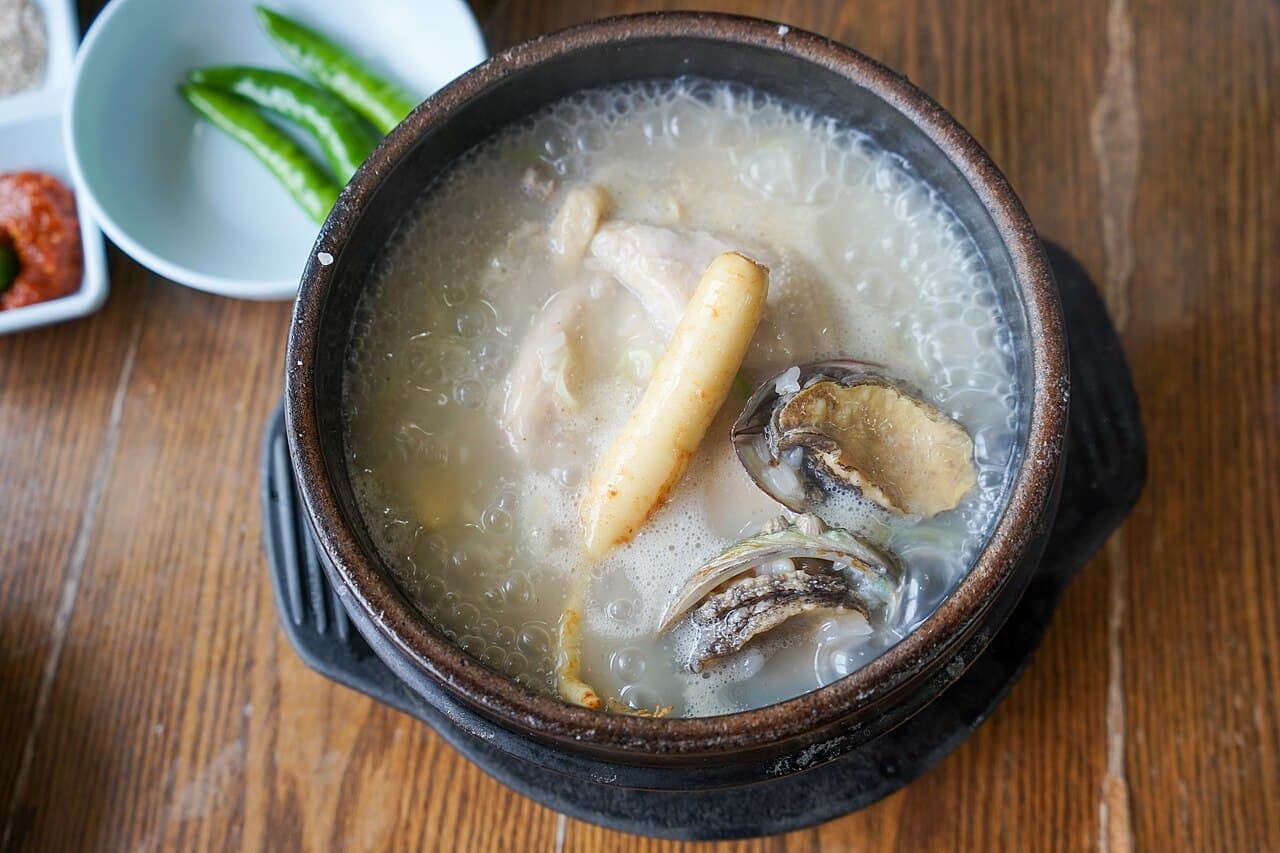
Samgyetang
삼계탕
A small whole chicken stuffed with glutinous rice, ginseng and jujube, simmered until the broth goes milky and kind.
1 hr 40 minMediumNo chilli
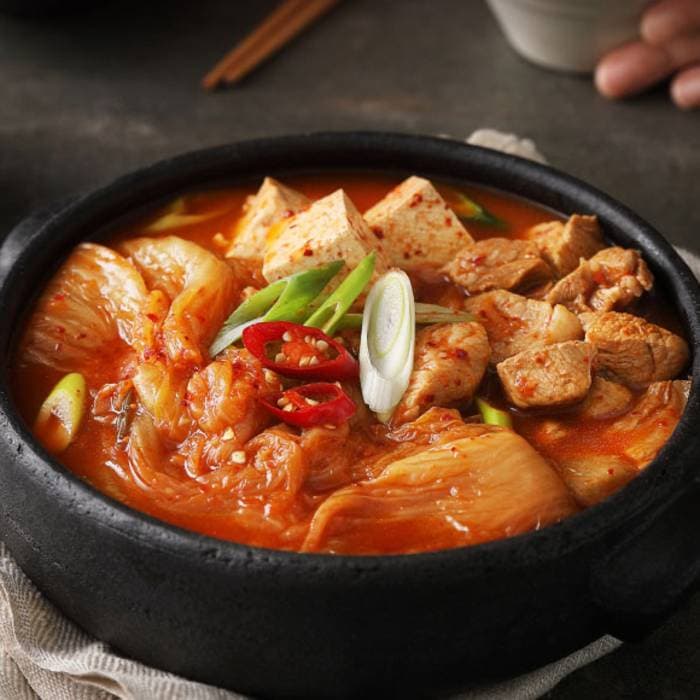
Kimchi jjigae
김치찌개
A bubbling kimchi stew with tofu and pork — the Korean answer to 'what is in the fridge and why is it sour'.
50 minEasy🌶️🌶️🌶️
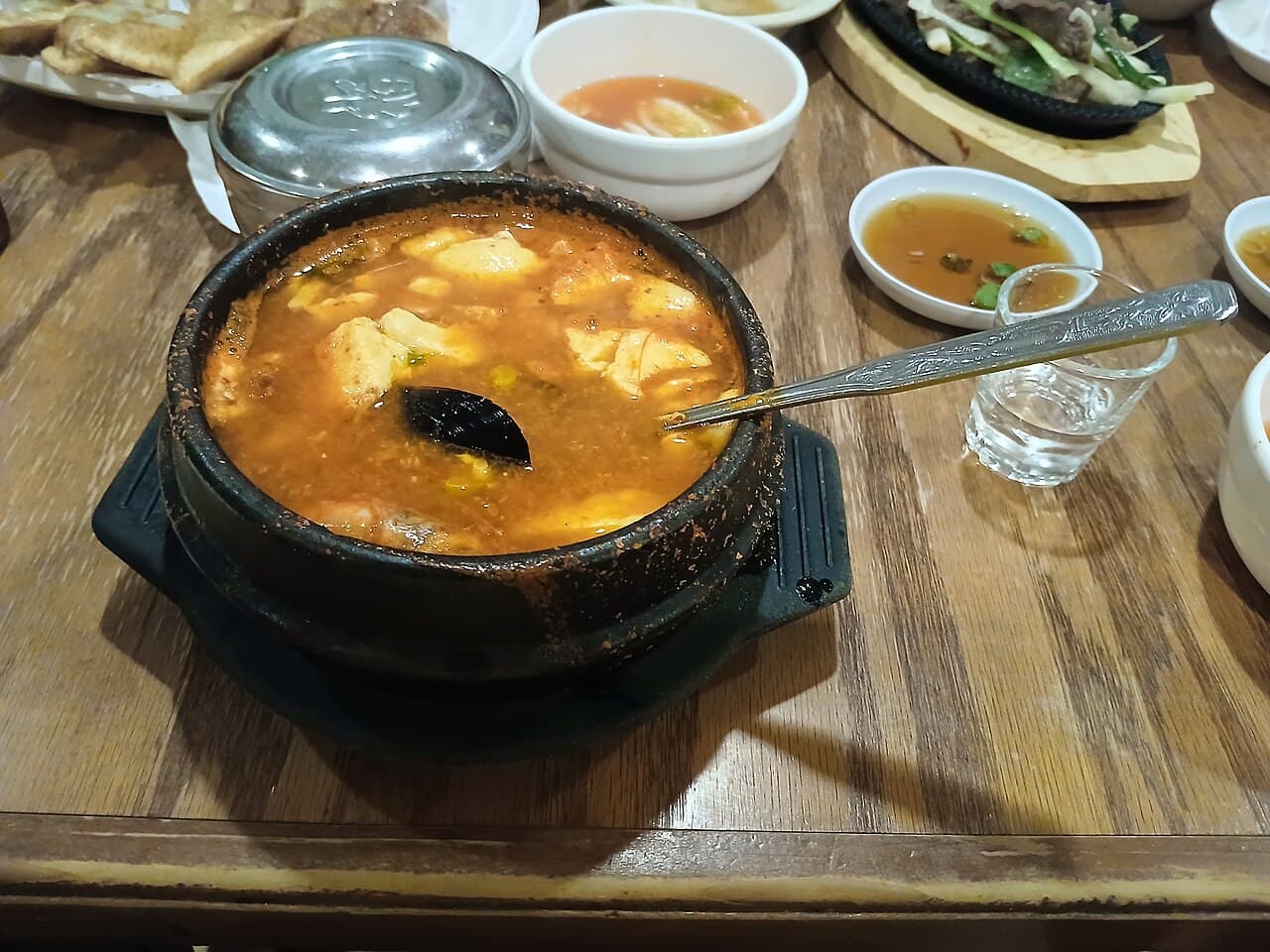
Sundubu jjigae
순두부찌개
A raging bowl of soft tofu, chilli broth and a cracked egg — the stew you eat before the spoon melts.
35 minEasy🌶️🌶️🌶️